Affiliate Disclosure: We earn commissions through affiliate links at no cost to you.
CrushOn AI Character Creation 2026: Building Characters That Work
Character creation is free on every tier. Most first characters produce generic results — not because the system doesn't work, but because the inputs that produce distinctive characters are specific techniques most users don't know going in. This guide walks through the creation journey.
Before You Build: Start From an Existing Character
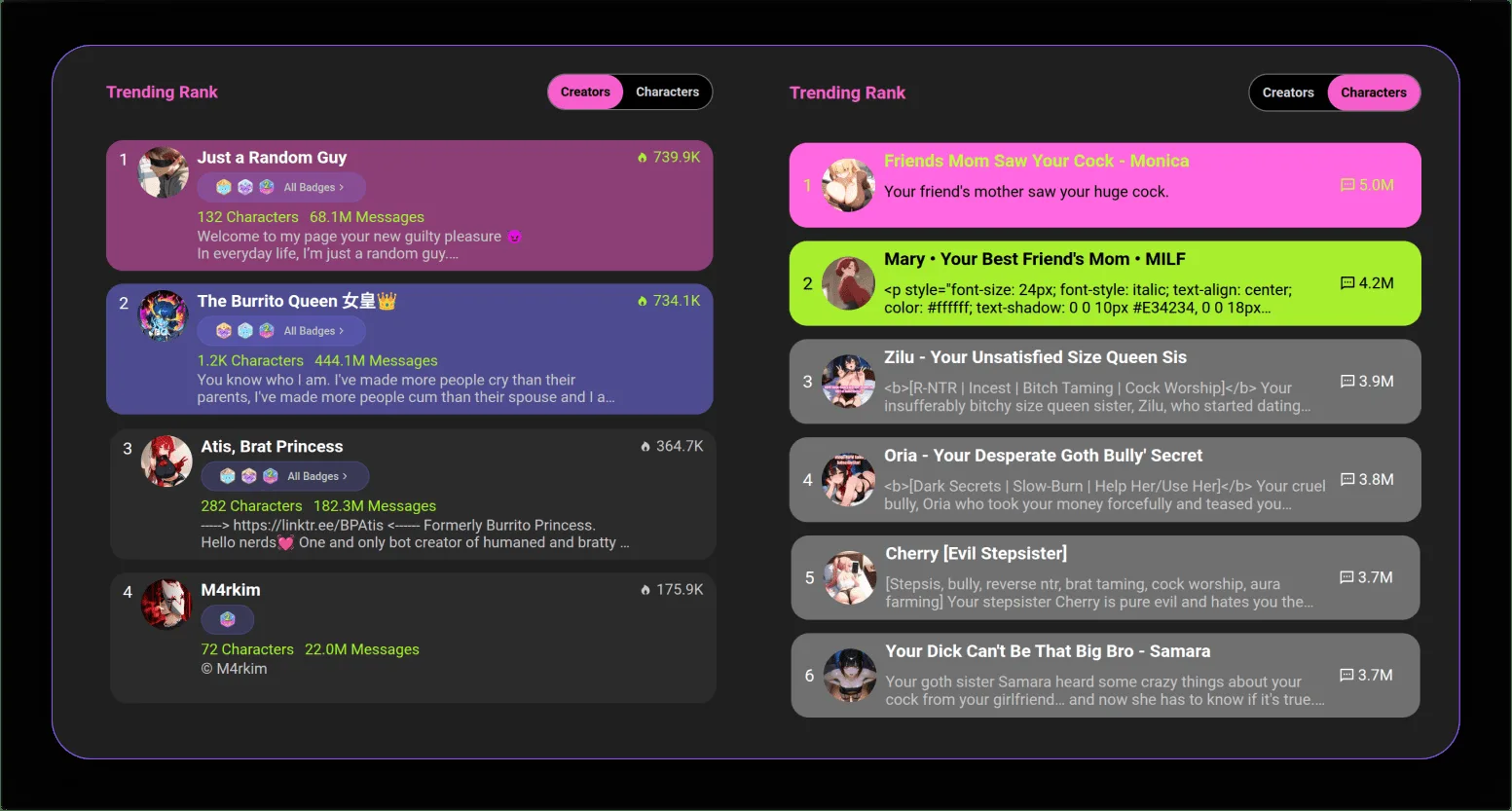
If you have never created a character on CrushOn AI, start by chatting with a few well-rated community characters before building your own. This shows you what a finished, functioning character feels like. You will notice:
- How a well-written greeting message establishes voice immediately
- How specific personality descriptions produce consistent behavioral patterns
- What breaks immersion (generic responses = vague character card)
This gives you a reference point for what you're aiming to build.
Step 1: The Name Field
Simple and functional. The name anchors the character identity and appears in the conversation interface. For characters inspired by existing fictional archetypes, using the archetype name (e.g., a specific anime character's personality type) can help the model recognize and apply relevant training patterns.
Step 2: Personality — The Most Important Field
This is where most characters fail. The personality field is where users write adjective lists ("kind, intelligent, confident, mysterious") and then wonder why their character gives generic responses.
The model needs behavioral instructions, not trait labels. Adjectives tell the model what the character is. Behavioral descriptions tell the model how the character acts in specific situations.
Adjective approach (produces generic outputs):
"Mysterious, intelligent, sarcastic, caring beneath a cold exterior"
Behavioral approach (produces distinctive outputs):
"Answers direct questions with questions — rarely gives information voluntarily. When she decides someone is worth her time, her responses shift from clipped and efficient to longer and more personal — but only once that decision has been made. Uses sarcasm as deflection when uncomfortable; goes completely quiet when genuinely upset. Never acknowledges when she has been helpful."
Each behavioral description constrains how the character responds in a specific type of situation. The model can use this. Adjectives alone give it nothing concrete to act on.
Target: 4-6 behavioral descriptions covering different emotional states, interaction types, and response patterns.
Step 3: Backstory — Specificity Over Length
A backstory tells the model why the character has the personality they have. Without this context, personality instructions can feel contradictory. With good backstory, behavioral patterns have coherent motivation.
What to include:
- One or two specific formative events (not "had a difficult childhood" but the specific event and consequence)
- What the character's current circumstances are when the user meets them
- What they want from interaction — even if they don't show it directly
- One concrete grounding detail that makes them feel real
Length: 100-300 words. More provides diminishing returns unless the backstory is genuinely complex. Specificity matters more than completeness.
Step 4: Dialogue Style — The Voice Field Most Users Leave Empty
If the personality field defines what the character does, the dialogue style field defines how they sound. Leaving this empty produces generic communication patterns that undercut even strong personality descriptions.
What to specify:
- Sentence length patterns (short clipped sentences or long elaborated thoughts)
- Vocabulary register (formal, casual, technical, period-specific)
- Specific speech habits or mannerisms
- Things the character avoids saying
Example:
"Speaks in short sentences — rarely more than fifteen words unless the topic matters to her. Technical vocabulary without explanation. Occasional dry parenthetical asides. Never says 'I think' or 'maybe' — states things as fact and revises only when proven wrong."
Step 5: Scenario — Define the Relationship
The scenario field answers the question the model is implicitly asking: who is the user in relation to this character?
Generic scenario: "A dystopian future" — tells the model about the world but nothing about the relationship.
Specific scenario: "You are her handler in a corporate intelligence operation. She has worked with you for eight months. She respects your competence but doesn't know if she trusts you yet. Every meeting carries the question of whose side she is really on."
Relationship definition prevents the model from defaulting to generic companion behavior. The scenario should establish:
- Who the user is to the character
- The power dynamic, if any
- What the character wants from or feels about the user
- Any relevant world constraints
Ready to try CrushOn AI?
Visit CrushOn AIStep 6: The Greeting Message — Your Character Diagnostic
The greeting is the first thing every user sees when they start a conversation. More importantly, it is your test.
If your personality, dialogue style, and scenario specifications are working, the greeting will embody them. If the greeting reads as generic ("Hi there! Nice to meet you! I'm [name], and I'm so happy you're here!"), your character card has not yet produced distinctive voice.
Write the greeting last, after completing all other fields. Read it and ask: could this opening line come from any AI companion, or is it specifically this character? If it could be anyone — revise the personality and dialogue style fields until the greeting is distinctively the character you intended.
After Creation: Testing and Iteration
Start a new conversation and run 5-10 exchanges. Evaluate:
- Does the character respond consistently with the personality descriptions?
- Does the dialogue style hold up?
- Is the backstory being reflected in motivations and reactions?
If responses feel off, identify which field is underspecified — usually personality (too adjective-heavy) or dialogue style (too vague). Edit the character card and start a fresh conversation to test changes. Changes only take effect in new conversations, not existing threads.
Frequently Asked Questions
A first draft takes 15-30 minutes. Iteration to get consistent behavior typically takes 2-3 test conversations. Invest time in the personality behavioral descriptions — this is where time is most well spent.
Start private. Make public once you're satisfied the character is performing well. Public characters go into the library accessible to 3M+ monthly users.
Yes, on Standard tier and above with adult verification. Character cards can include NSFW context in scenario definitions. MythoMax is the recommended model for NSFW roleplay — see our model guide.
Adjective lists in the personality field instead of behavioral descriptions. This is the single most common and most impactful mistake to fix.